
Hamblen County Criminal Court Cases
Hamblen County splits adult criminal work by court level. Criminal Court tries felony offenses. General Sessions Division I hears misdemeanors, traffic matters, warrants, initial appearances, bond issues, and the preliminary steps of felonies. A felony may begin in General Sessions and later move to Criminal Court after bind-over and grand-jury action. Morristown Municipal Court keeps a separate city docket for ordinance and municipal traffic matters. The Tennessee Court of Criminal Appeals holds the appellate layer after a qualifying Criminal Court judgment.
The combined Circuit, Criminal, General Sessions, and Juvenile Court Clerk is the custodian for the main Hamblen County case files. The clerk supplies docket status, dispositions, judgments, costs, copies, archive routing, and subscription web access. An arrest report or jail record may point toward a case, but neither replaces the filed court record. Readers tracing an earlier booking into a prosecution can compare it with the county's arrest lookup channels before asking the clerk for the final court result.
The official Hamblen County court page shows the clerk and court information used for this local split.
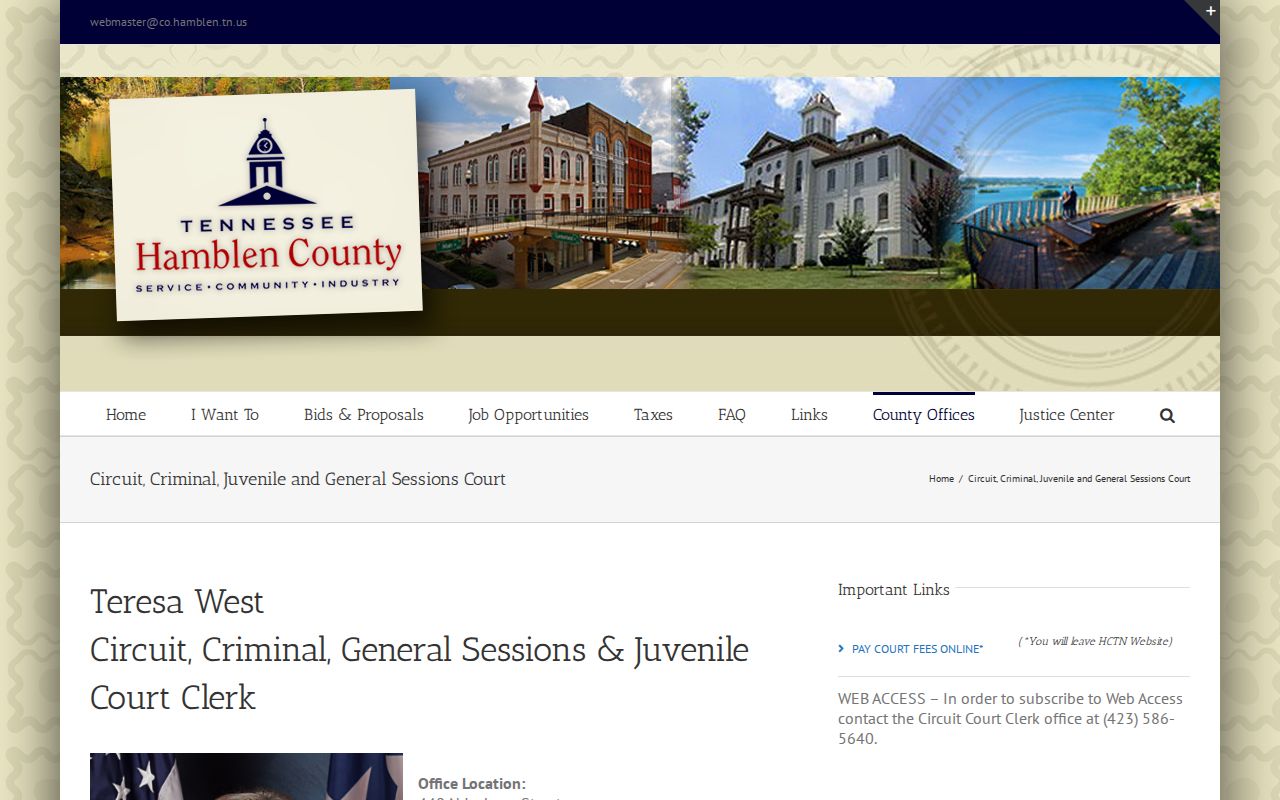
The image reinforces that Hamblen County court access runs through named local courts and one combined clerk rather than a free statewide trial-court name search.
Hamblen Criminal Courts at Allison Street
The courtroom location helps explain where a criminal case is heard and where its file is ordered. General Sessions Division I sits at 510 Allison Street in Morristown, and its primary function is criminal work. The Hamblen Criminal Court judge's office is listed at that same address. The clerk's records office, however, is at 440 N. Jackson Street. A person who needs a case file should call the clerk before going to a courtroom address.
General Sessions Division II is listed at the historic courthouse on West Second North Street and focuses on civil and juvenile work, so it is not the main adult criminal counter. The distinction saves a failed visit. Courtroom staff manage hearings; the clerk manages docket access and copies. No official source states a visitor parking rule, device rule, or dedicated court-access terminal procedure. Ask the clerk before carrying files or devices into the building.
| Court | Local role | Access point |
|---|---|---|
| Criminal Court | Felony trials, pleas, judgments, and sentences | 510 Allison Street; judge office 423-586-8640 |
| General Sessions I | Misdemeanors, warrants, traffic, and early felony stages | 510 Allison Street; clerk 423-586-5640 |
| Combined clerk | Dockets, outcomes, copies, costs, and web subscriptions | 440 N. Jackson Street; 423-586-5640 |
Searching Hamblen County Case Records
Tennessee has no free, complete statewide trial-court name search for the public. Hamblen County instead advertises subscription Web Access arranged by telephone with the clerk. The public court page does not expose the gated interface's full field list, year range, or document coverage. A sound search therefore starts with the court, approximate year, full name, and any known case number. Ask whether the subscription includes the needed period before paying or creating access.
- Call the combined clerk at 423-586-5640 and identify whether the matter belongs to General Sessions, Criminal Court, or a city court.
- Give the full name, approximate filing or arrest year, and case number when known. Ask if subscription Web Access covers that file.
- Open the docket and compare the court, charge, filing date, and status. Do not match a person on name alone.
- Read event entries in date order, including warrant, bind-over, indictment, plea or trial, judgment, and sentence.
- Request a plain or certified copy from the clerk when the docket summary is not enough. Confirm retrieval and certification costs first.
| Search detail | Status | How to use it |
|---|---|---|
| Case number | Best identifier when known | Give the full number and court division to the clerk |
| Party name | Expected case identifier | Pair it with year, court, or other public facts |
| Filing year | Coverage not published | Ask whether Web Access includes the needed year |
| Document image | Not promised | Order the filing from the clerk if the docket lacks it |
| Subscription | Required for county Web Access | Set it up by calling the clerk |
Note: Hamblen County's payment link handles court fees, but a payment page is not proof that a full case file is publicly searchable.
Older Hamblen Criminal Case Files
An older file may fall outside the subscription view or may not have document images online. Start with the combined clerk and give the closest year, court, name, and case number available. Ask whether staff must retrieve an archived file and whether the requested item can be certified. A docket sheet can identify a judgment date or disposition, while the signed judgment or order supplies the stronger record of what the court actually decided.
Hamblen County Archives preserves older legal material at the historic courthouse, but it is not the live docket-status desk. Let the clerk decide when an old file should route to archives. The official County Archives page describes that preservation role and its local record mission.
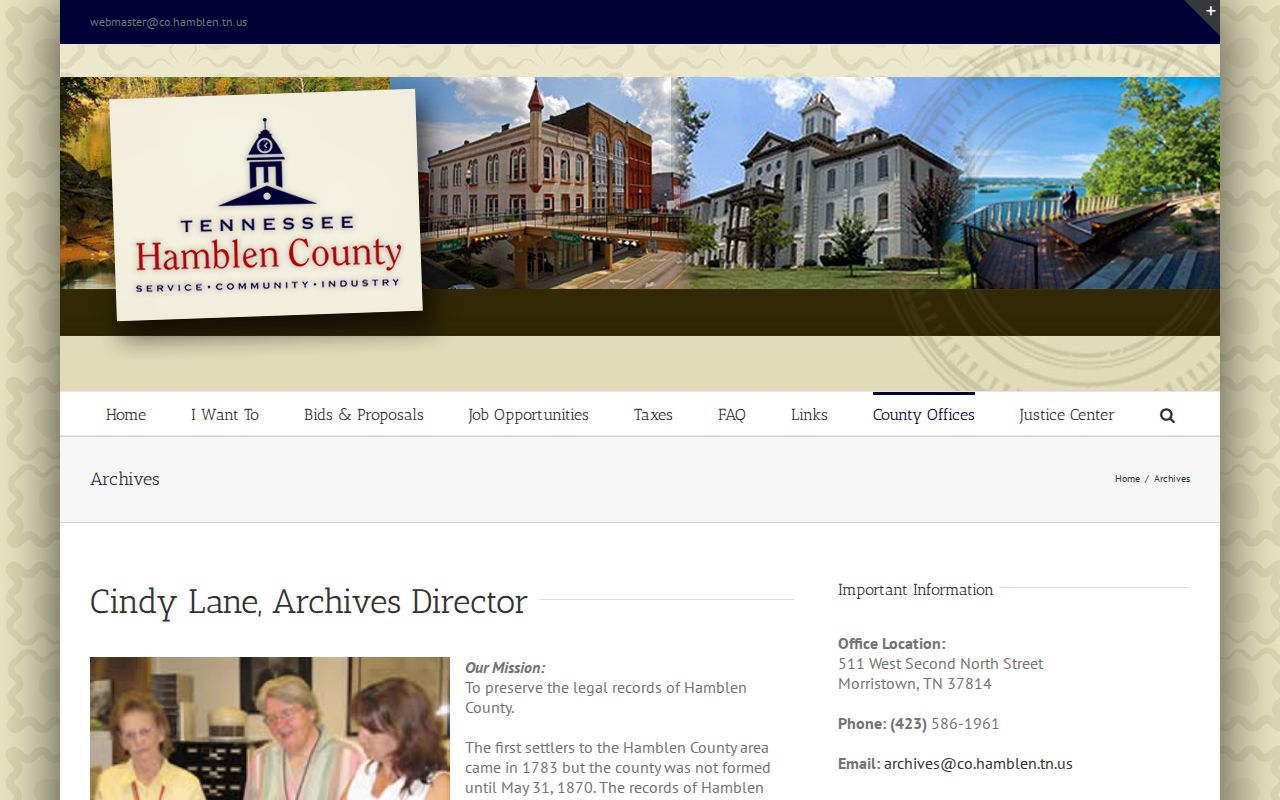
The archive view marks a clear line between historic research and a current Hamblen County criminal docket, which remains the clerk's responsibility.
Inside a Hamblen County Case File
A complete Hamblen County criminal case file can tie a filing to its court, judge, parties, charges, hearings, result, and sentence. The docket is a date-ordered event list. It can show when counsel appeared, a preliminary hearing was held or waived, a felony was bound over, an indictment was returned, motions were filed, and a plea or trial occurred. The signed judgment is more important than a booking label when the question is the final charge and outcome.
| Case header | Case number, court or division, filing date, status, case type, and judge. |
|---|---|
| Charge detail | Description, statute or code, count, classification, and whether a charge was filed or amended. |
| Docket events | Warrant, appearance, counsel, hearing, bind-over, indictment, motions, plea, trial, and appeal entries. |
| Bond and settings | Public amount or type, date, courtroom, and hearing type when the docket displays them. |
| Disposition | Dismissal, nolle prosequi, acquittal, conviction, or another current outcome for each charge. |
| Judgment and sentence | Signed result, custody or probation terms, fines, costs, restitution, and later revocation events when public. |
Protected identifiers, juvenile details, victim information, and sealed or expunged content should not appear in the public file. A financial ledger may be available through the subscription view, but the county page does not promise it. Call for the exact document.
Reading Hamblen Criminal Docket Terms
Short docket phrases carry different legal weight. A true bill means the grand jury returned an indictment; a no bill means it declined to indict on the matter presented. Nolle prosequi means the prosecutor formally chose not to continue a charge at that time. A dismissal ends the charge without a conviction, while an acquittal is a not-guilty result after adjudication. None should be rewritten as a conviction.
- Bind-over
- General Sessions sends a qualifying felony matter toward grand-jury review.
- Arraignment
- Criminal Court formally addresses the indictment and plea.
- Capias
- Court process directing custody, often tied to a failure to appear or comply.
- Disposition
- The final or current result recorded for a charge.
- Judicial diversion
- A Tennessee path that defers judgment while conditions are completed and may lead to dismissal and expungement.
The Tennessee judiciary maintains an official court forms library for statewide forms, including expungement material.
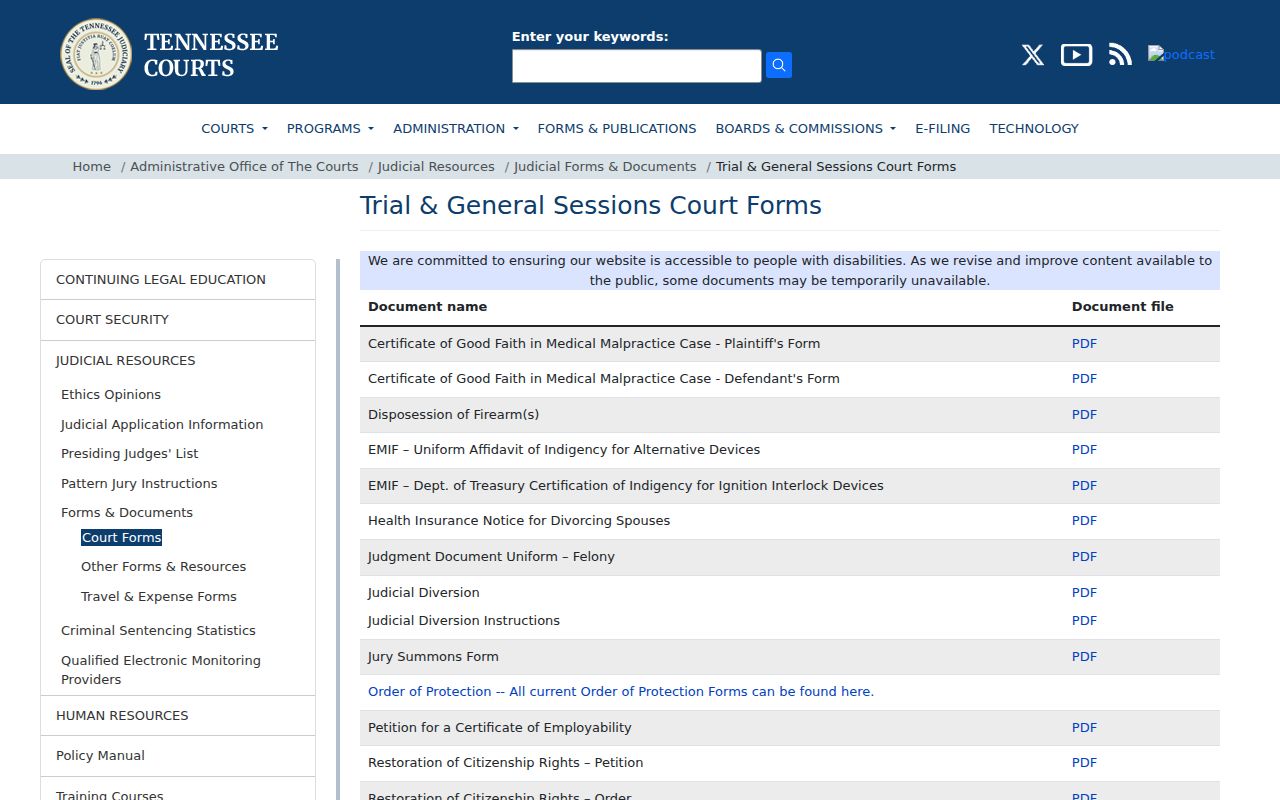
The forms source helps a reader distinguish a docket entry from a petition or signed order filed in the Hamblen County case.
How a Criminal Case Moves
A custodial case may start with arrest and booking, but the court file begins its own record trail. General Sessions handles the initial appearance and bond. A misdemeanor may end there. A felony can move through a preliminary hearing or waiver, bind-over, and grand jury. A true bill produces an indictment in Criminal Court, followed by arraignment, pretrial work, plea or trial, judgment, and sentence. Appeal records then move into the statewide appellate system.
Case flow: Charges Filed › Arraignment › Pretrial › Plea or Trial › Disposition › Sentencing
A booking charge can change before indictment. The prosecutor may file a different charge, and the grand jury may return another result. For that reason, Hamblen County case records should be read chronologically. The charge on the signed judgment controls the court result, not the first label in a detention list.
Hamblen Court Files and TORIS
A clerk file and a Tennessee Open Records Information Services result are not duplicates. The clerk file is case-centered. It contains local docket events, filings, settings, judgments, and costs. TORIS is identity-centered and reports fingerprint-supported Tennessee arrest cycles with outcomes reported to the Tennessee Bureau of Investigation. Its public name check does not include aliases, and delayed or missing disposition reporting can leave an arrest cycle without the detail found at the clerk.
Use the clerk when the aim is to understand one Hamblen County prosecution or obtain a certified judgment. Use TORIS when the aim is a broader Tennessee name-based repository record. If TORIS still shows a dismissed or cleared item incorrectly, obtain the complete local disposition first, then use TBI's correction route. A public name match alone is never enough to conclude that two records concern the same person.
Federal Cases Outside Hamblen Courts
Federal criminal files from Hamblen County do not sit with the county clerk. The county lies in the U.S. District Court for the Eastern District of Tennessee, and PACER provides federal docket access after registration. PACER fees may accrue under the current federal schedule. A federal case number, district, and party name are the right starting points; county Web Access cannot substitute for that separate docket.
The official PACER service is the federal account and case-search route.
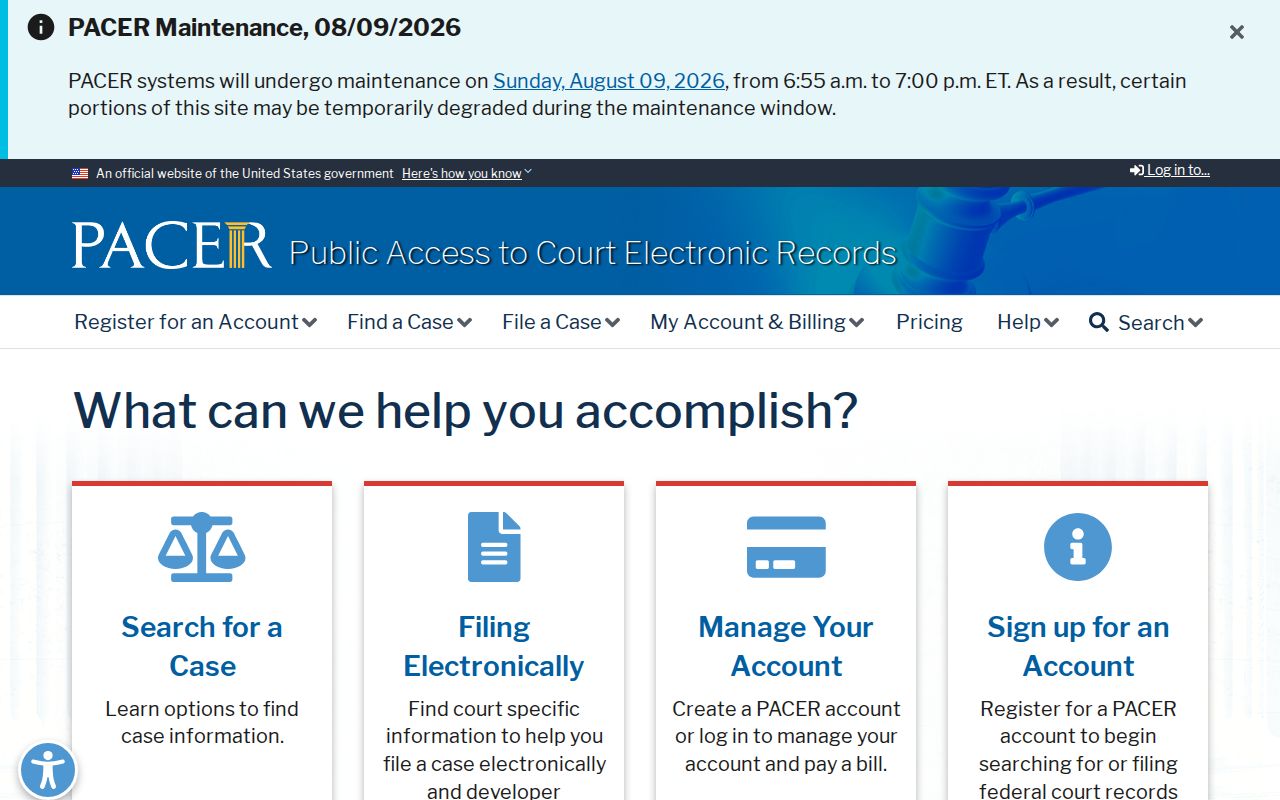
This federal search belongs outside the Hamblen County clerk workflow because it retrieves a different court system's docket.
The Eastern District of Tennessee court is the official district source for its rules and court operations.
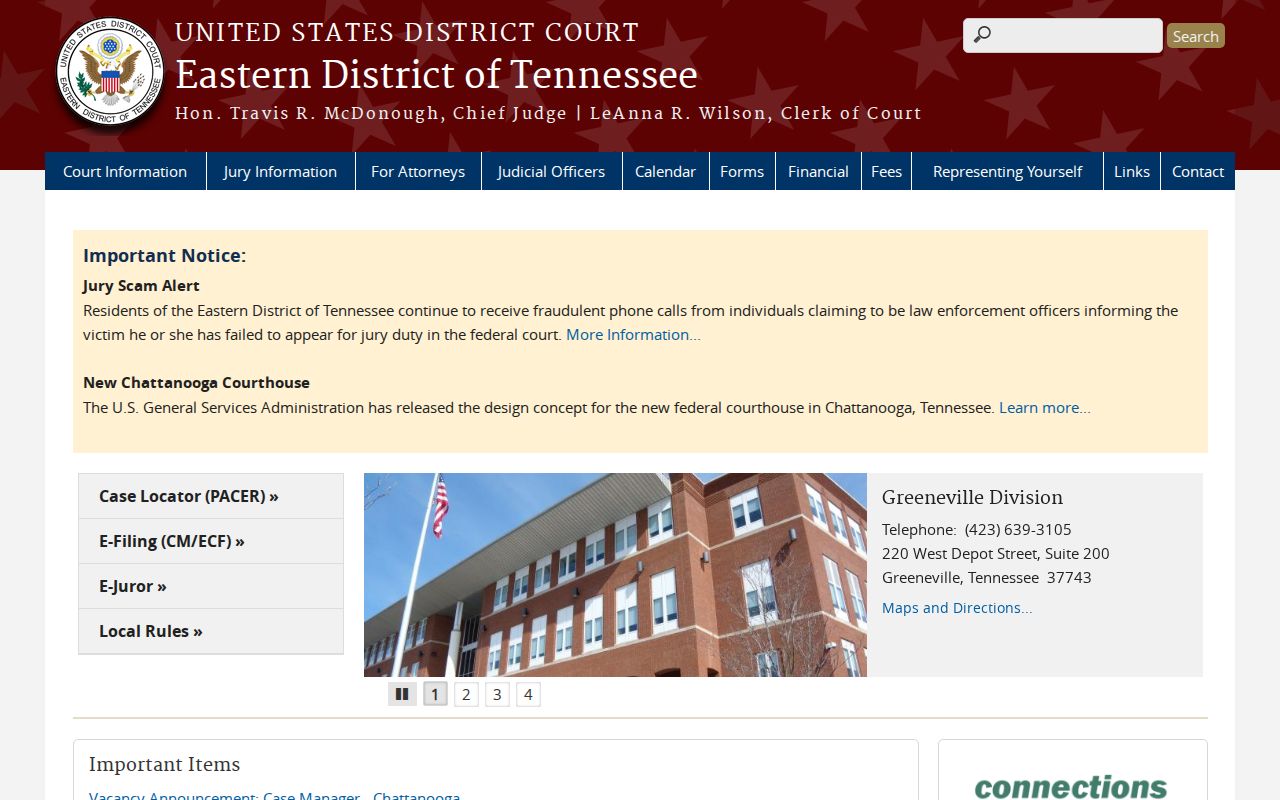
The district image helps confirm jurisdiction before a reader spends time searching the wrong county or federal record system.
Case Record Access & Restrictions
Tennessee Supreme Court Rule 34 governs public court-record access while protecting confidential data. Public access does not erase limits for juvenile material, protected victims, personal identifiers, sealed filings, or expunged cases. Online views can be narrower than the paper file, and even the clerk must withhold or redact content when law requires it. An absent online result can mean wrong court, incomplete year coverage, delayed entry, sealing, expungement, or a simple search mismatch.
Ask the Hamblen County clerk to confirm court, number, status, and copy options without demanding protected details. Tennessee's Public Records Act governs many county records, but court files also follow judiciary access rules. An expunged case should not behave like an ordinary open docket. If a qualifying signed order has not reached another system, use certified copies and the correction channel instead of assuming the court result changed.
Note: A clerk-confirmed disposition is the sound source for outcome; a booking charge remains an allegation unless the court record resolves it.